
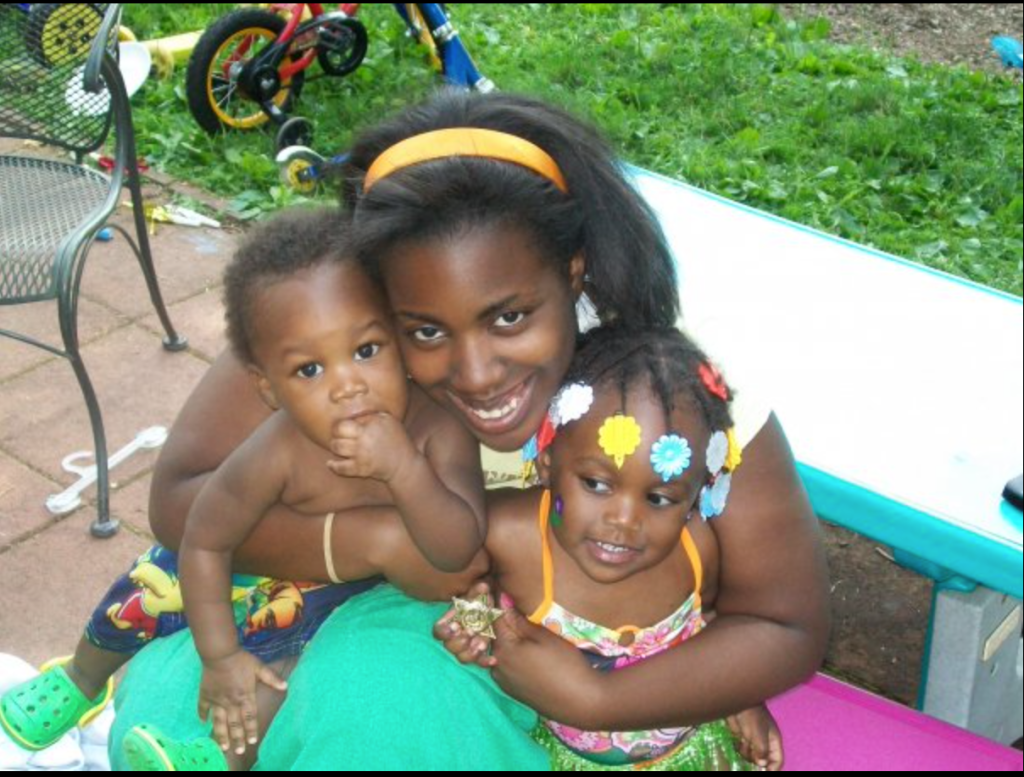
I was a mom at 17.
They’re adults now—thank God.
My oldest will be 19 in a few months, and I won’t even be 38 yet. People are always surprised when they hear that I’ll have two adult children before I’m 40. They usually ask how it feels to be “almost done.”
I don’t think there’s such a thing as being done as a parent. But I also don’t deny the excitement I feel. I just don’t say it out loud. The quiet longing to be free—in a sense—feels taboo, especially for mothers. Relief is treated like a betrayal.
Parenting Without a Blueprint
Parenting is hard.
Parenting is even harder when you start alone, homeless, and without a real example of what a “good” parent looks like.
You only know what bad parenting looked like. So you do the opposite.
You tell yourself: Don’t do what they did.
You exhaust yourself trying to give your kids what you never had—stable housing, warm meals made with love, their own space, their own things, a home that feels safe and full. You do it at the expense of yourself. Years of food insecurity. Escapism. A toxic hustle mentality disguised as strength.
Why?
Because your kids will not be on the street.
They will not be hungry.
They will not bounce from house to house, sleeping on floors and eating only at school.
When Survival Becomes Expectation
Somewhere along the way, survival turns into expectation.
I think, in some ways, it made my kids a little ungrateful. Not because they’re bad people—but because consistency can look like obligation when you’ve never seen what it costs. Motherhood became an exchange in their eyes: This is what you’re supposed to do.
The life skills I taught them—the ones meant to prepare them for the real world—felt unnecessary to them.
I was told I was being too hard on them.
That they didn’t need to learn what I learned at their age because life wasn’t as hard for them. And that broke my heart.
And maybe that’s true.
Not everyone had to become me—an anxious, hyper-independent, quiet adult who learned survival before softness.
The Guilt Mothers Carry
There is so much guilt wrapped around motherhood. Guilt for wanting rest. Guilt for wanting quiet. Guilt for wanting your body, your time, your mind back.
Mothers are expected to carry exhaustion gracefully—to suffer silently and call it love.
But love that requires constant self-abandonment isn’t noble.
It’s unsustainable.
I love my children. And I still grieve the years where I was only surviving, not living. Feeling relief now doesn’t erase the love I gave then.
Letting Go Is Still Love
So I let them experience life. I let them make their own decisions. I step back more than they like. But I believe it’s necessary.
Love doesn’t always look like protection.
Sometimes it looks like trust.
Sometimes it looks like distance.
When Parents Go Low-Contact or No-Contact
We talk a lot about children who cut off their parents. We talk far less about parents who step back to survive.
Some parents go low-contact or no-contact with their adult children not because they failed—but because continuing the relationship costs them their peace, their healing, or their safety.
Love does not mean limitless access.
Parenthood does not mean self-sacrifice forever.
I love my children deeply.
And I’m allowed to be relieved that the hardest part is over.
I’m learning who I am outside of survival. Outside of motherhood. That doesn’t erase the love—it finally gives it room to breathe.



 Taja Henson
Leave a comment